
I’ve recently discovered that food is one way I express care and love. You JUST found out? You ask. Ya, a little late but better than never.
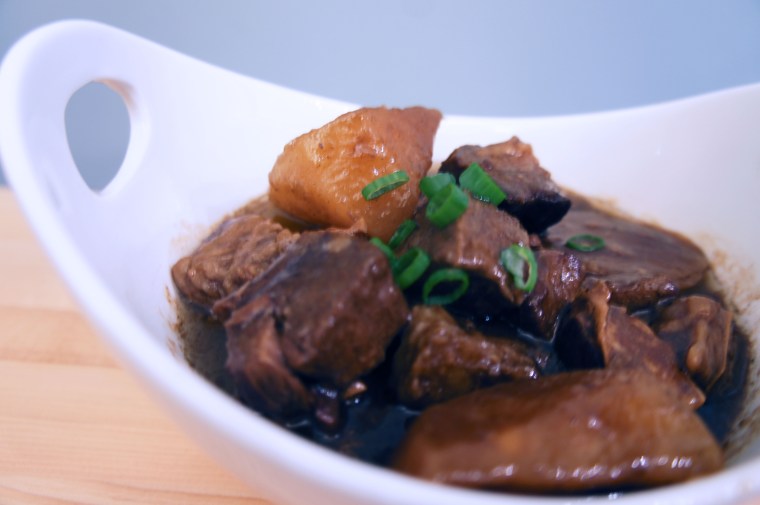
The Chinese Stewed Beef Brisket in Chu Hou Sauce is my go-to dish. It’s fancier than stir-fry. It’s a treat for all my Ung boys at home. It’s convenient because you can make it the night before or freeze it after. It goes with any sides (rice, noodles, potatoes, bread.) I’ve made it for potluck, when we have company over, or as gifts to friends and family as a token of appreciation/support. Is this my favourite dish to eat? No. I make it because I care about the people that I made this dish for. If I make this for you, it shows you mean something to me.
Ready?
So here’s what you will need. If you are not familiar with the asian sauces, hopefully the pictures will help you find them!
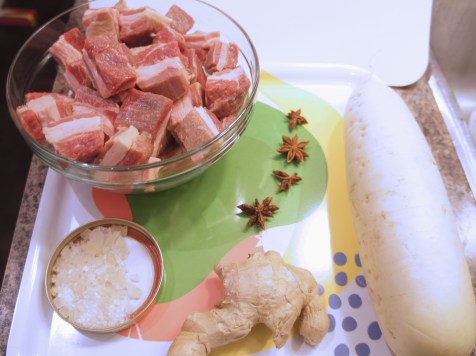
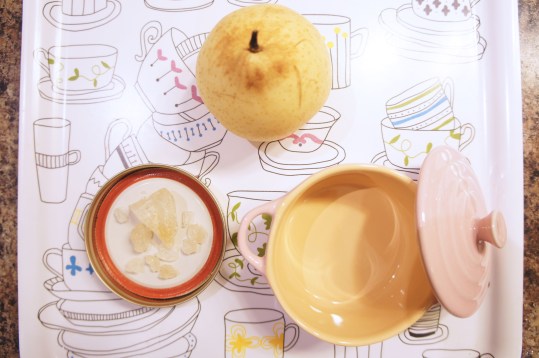
These are the ingredients that you will need: Beef brisket, star anise, rock sugar, ginger, and daikon.
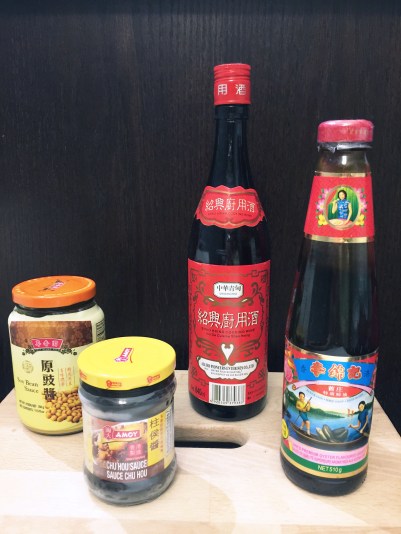
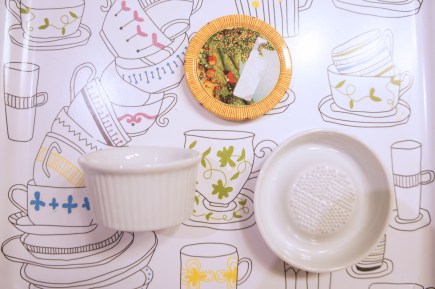
And these are the main sauces that you will need. You should be able to find them at your local asian grocery store or stores in China Town. Show them this picture and they should be able to help you find them! Obviously they are available in different brands but it should still have the same name.
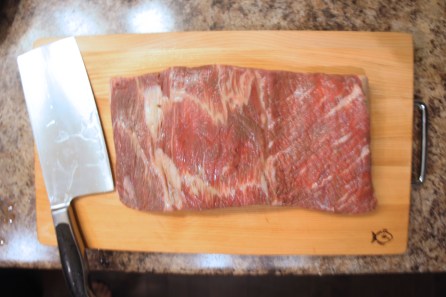
So, the brisket. This is usually what it looks like when I buy at the store. Try to pick one(or ask your butcher to pick) that is not too fatty. Or else you wouldn’t have much meat left after it’s been stewed. One of these usually is about 2 lbs.
 If you are lucky, or if you smile really big and ask really nicely, your butcher might decide to be helpful and cut the brisket into cubes for you at the store! In my case, sometimes, the butcher does it for me (I’ve only had that luck maybe 2 out of 5 times…worth a try though!), sometimes, I just smile and ask Richard really nicely. Hee hee! I don’t really like cutting big slabs of meat….
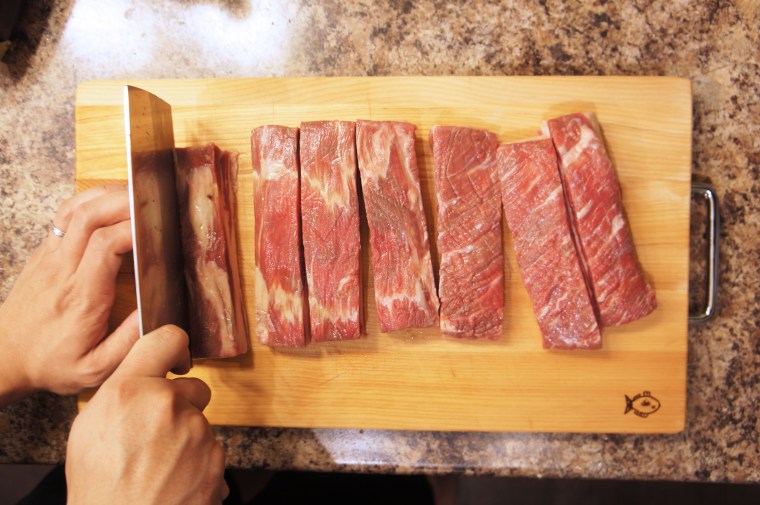
You cut the brisket into bite size cubes. I like them on the smaller size but it really depends on the piece of brisket that you got. If it is quite fatty, you will want to cut them into larger cubes so that there’s still meat left after the fat melts away during the stewing process. Up to you! And yes, these are not my hands. I asked Richard really nicely today to help cut the meat so I can take the photos 🙂 !
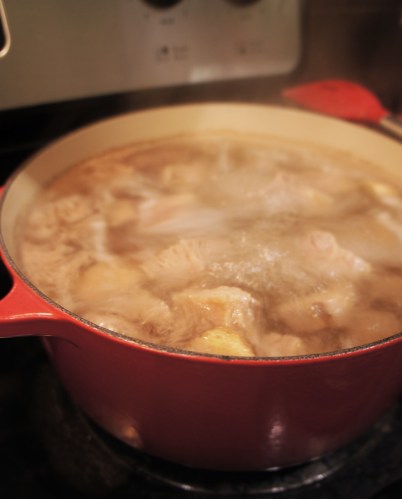
In Chinese cooking, sometimes we blanch the meat before further cooking it. Place meat in a pot of cold water with a few slices of ginger, green onion, and Shao Hsing cooking wine. Bring to a boil and let it cook for 5-8 minutes. You will see the excess fat and blood in the water as you boil. Rinse meat in cold water immediately to stop the cooking process.
When you are done blanching the brisket, make sure you drain all the access water so that it will sear well and seal in the juice and caramelize nicely. I use my Le Crueset dutch oven when I make this dish. I totally love it! You can use any large size pot that you have, too!
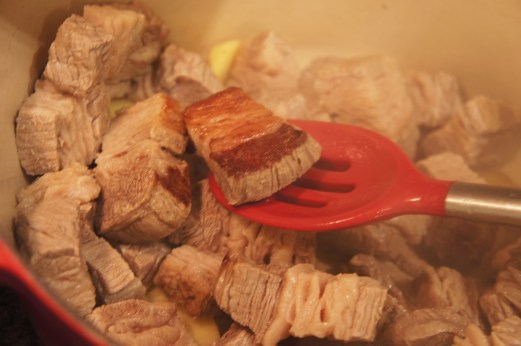
Sear the brisket in hot oil with a few slices of ginger. They don’t have to be perfectly seared on all four sides. As long as most of them are getting some color. This helps enhance the flavor of the brisket. When I’m feeling really lazy, I skip this step. It’s not a huge difference.
Then you are going to add the Soy Bean Sauce and the Chu Hou Sauce and let the sauce heat up with the brisket for a minute. I couldn’t take a picture of it because this is a quick process. The sauce will begin to burn if you let it cook too long. Just mix it until it is fragrant and most of the brisket are coated in the sauce.
Then you add the water, rock sugar, and the star anise. Bring it to a boil, and then simmer it with the lid on.
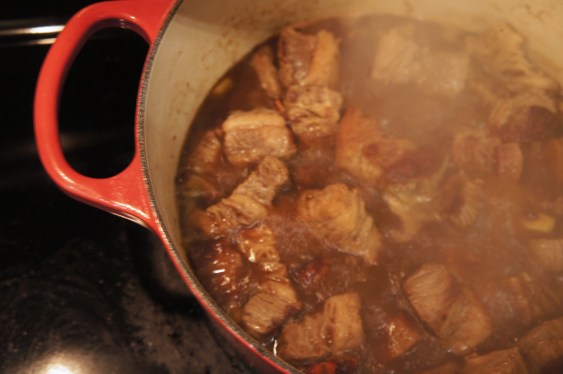
You can smell this, can’t you? 😀
Now, the daikon. No, I didn’t forget them! After you have stewed the beef brisket for about an hour and a half (or two hours, if you want them to melt in your mouth. Richard likes it with more of a bite to them still.) Cut up the daikon and put them in the pot! Stew everything for another 30minutes.

If I’m making this dish the night before, I usually just put the daikon in, bring it to a boil, and turn the heat off to let it sit on the stove. The residual heat, along with my dutch oven, will cook the daikon, but not enough to break it down. When I’m ready to eat it the next day, I just have to heat it up, and the daikon would be perfect. Not too mushy, not too hard.
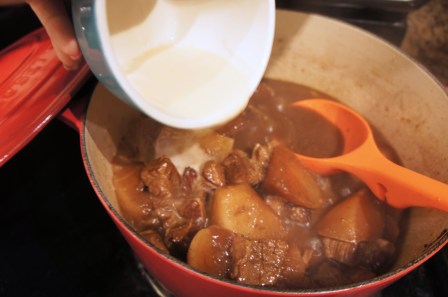
When you are ready to serve the beef brisket, pour in a corn starch mixture (with oyster sauce, sugar, cold water, and corn starch) to thicken up the sauce so that it coats the beef brisket.
And you are ready to serve!! I LOVE rice, so I always have mine with rice. You can always serve it in broth with noodles, or you can serve it with flat bread or a bun! Whatever you are in the mood for!
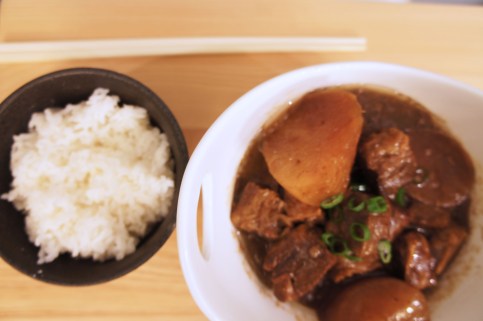
Writing this post makes me hungry…. I think i have some left over stewed beef brisket in the freezer…
A great Sunday dinner. Comfort food. Leftovers for lunch (or no left over!). Give it a try and comment to let me know how it goes!
Chat soon,
Stephy
Stewed Beef Brisket in Chu Hou Sauce
Ingredients
*2-3lbs (or 1-1.5Kg) of Beef Brisket
*1 Daikon (about 800-1000g, depending on how much you like them)
*4-5 slices of Ginger (the size of a large coin and about 1/8′ thick)
*3 Star anise (I really like the flavour of Star Anise so I might even do 4 for a larger pot)
*1 piece of rock sugar (about the size of a large grape, 20-30 g)
*1 green onion
*2 tbsp Shao Hsing cooking wine
*1-1.5L water (enough to cover the brisket)
Sauce
*3 tbsp Chu Hou Sauce
*2 tbsp Soy Bean Sauce
Thickening Sauce
*2 tsp oyster Sauce
*1 tbsp corn starch
*2 tbsp water
What to do:
- Blanch the brisket with 2 slices of ginger, green onion, and Shao Hsing cooking wine. Drain well.
- Sear the brisket with the rest of the ginger on medium high heat until most of the pieces have caramelized.
- Add in Chu Hou sauce and Soy Bean sauce and stir quickly so it doesn’t burn.
- Add in enough water to cover the beef brisket. Add in rock sugar and star anise. Bring to a boil.
- Reduce heat to low and stew for 1-1.5 hours(until tender).
- Add in the daikon. Bring to a boil, and reduce heat to stew for another 30minutes (or more if you like the daikon softer).
- Just before serving, pour in the thickening sauce and bring stew to a boil again.
- Serve hot with rice, noodle soup, or a bun!
Note: This dish freeze well. I usually let it cool down and put it in a large ziplock bag.
Enjoy!
Thanks for reading!



 stephyeverafter.com